Rhodochrosite Bracelet Meaning, Healing Properties, and Daily Benefits
Table of Contents
- What Is Rhodochrosite? Meaning Behind the Stone of the Compassionate Heart
- Rhodochrosite Bracelet Benefits: Emotional Healing, Self-Love, and Inner Child Work
- Easing Old Wounds and Releasing Self-Destructive Patterns
- Attracting Love, Compassion, and Positive Relationships
- Joy, Confidence, Creativity, and Everyday Mood Support
- The Heart Chakra Connection: How Rhodochrosite Energy Works
- How to Wear and Care for Your Rhodochrosite Bracelet
- Which Wrist, Pairing with Other Crystals, and Daily Wear Tips
- Cleansing, Charging, and Protecting the Stone’s Soft Surface
- Is Rhodochrosite Safe to Wear? What to Know Before You Buy
- FAQ
- What are the benefits of wearing a rhodochrosite bracelet?
- How does rhodochrosite help with emotional healing and the heart chakra?
- Which wrist should you wear a rhodochrosite bracelet on, and how do you cleanse it?
- Is rhodochrosite safe to wear against the skin every day?
- How do you choose a genuine rhodochrosite bracelet?
- Sources
What Is Rhodochrosite? Meaning Behind the Stone of the Compassionate Heart
Rhodochrosite is a manganese carbonate mineral, typically found associated with manganese ores, and it is commonly a rose-red color that can vary across shades of pink to light brown. The Smithsonian National Museum of Natural History notes that some brightly colored specimens are popular with collectors but are typically too soft and fragile to be cut into conventional gems — a practical detail worth remembering when you shop for a bracelet. In crystal tradition, rhodochrosite is often called the stone of the compassionate heart. Its banded pink-to-cream patterns are read as a map of emotional layers: tenderness over old hurt, warmth over memory. That is the meaning most wearers carry with them — not a promise, but an invitation to soften.
Rhodochrosite Bracelet Benefits: Emotional Healing, Self-Love, and Inner Child Work
People often treat a rhodochrosite bracelet as a simple, continuous reminder — a physical cue to check in with how they feel rather than push through. Worn against the pulse point of the wrist, it can serve as a personal prompt for moments of reflection. Rhodochrosite is a manganese carbonate typically found with manganese ores and is commonly rose-red to pink or light brown; these brightly colored crystals are popular with collectors but are typically too soft and fragile to be cut into gems. Many wearers pair it with quiet inner work or reflective journaling as a personal habit rather than a quick fix.
Easing Old Wounds and Releasing Self-Destructive Patterns
Rhodochrosite is a manganese carbonate mineral commonly associated with manganese ores and is usually a rose-red color, though it can vary from pink to light brown. Some specimens from the Kalahari manganese fields are prized by collectors but are typically too soft and fragile to be cut into gems. If you are working through old emotional wounds, the bracelet can serve as a personal ritual object: something you touch when a familiar trigger rises, giving yourself a few seconds to pause and respond differently. Over weeks, those pauses can become a practical habit — not a medical treatment or a substitute for professional support.
Attracting Love, Compassion, and Positive Relationships
Some people wear a rhodochrosite bracelet as a personal reminder to stay open, warm, and approachable in daily interactions. Instead of expecting the stone to attract a partner or summon a person, treat it as a cue to notice how you show up — more open, less defended, quicker to offer warmth. The stone itself is a manganese carbonate, typically rose-red to pink, and its banded layers of rose against lighter stone are often read symbolically as holding tenderness and history at once. If you choose to wear it with intentions around connection, that is a personal choice and a reminder habit, not a guaranteed outcome.
Joy, Confidence, Creativity, and Everyday Mood Support
Because rhodochrosite is typically too soft and fragile to be cut into gems, a bracelet is usually a tumbled or beaded piece rather than a faceted stone. Some wearers use it as a personal cue on days when they want to make something, say something honest, or simply feel a little lighter. The bracelet becomes a permission slip for self-expression and creativity rather than a power source. Keep in mind that any mood-related benefit is a personal, subjective experience and not a medical effect of the mineral.
The Heart Chakra Connection: How Rhodochrosite Energy Works
Rhodochrosite is a manganese carbonate typically found associated with manganese ores and is commonly rose-red, though it can vary in shades of pink to light brown. Its soft pink color and banded structure — layers of rose against lighter stone — are often read symbolically as a reminder of tenderness and personal history. Meditation with rhodochrosite can be a personal practice for reflection, and many people use it as a cue to remember rather than strive. If you work with chakras as a personal framework, wear it on the left wrist during meditation to keep the focus inward, then switch wrists for the rest of the day if you prefer an outward, giving orientation. This is a personal choice and habit, not a verified energetic or health effect.
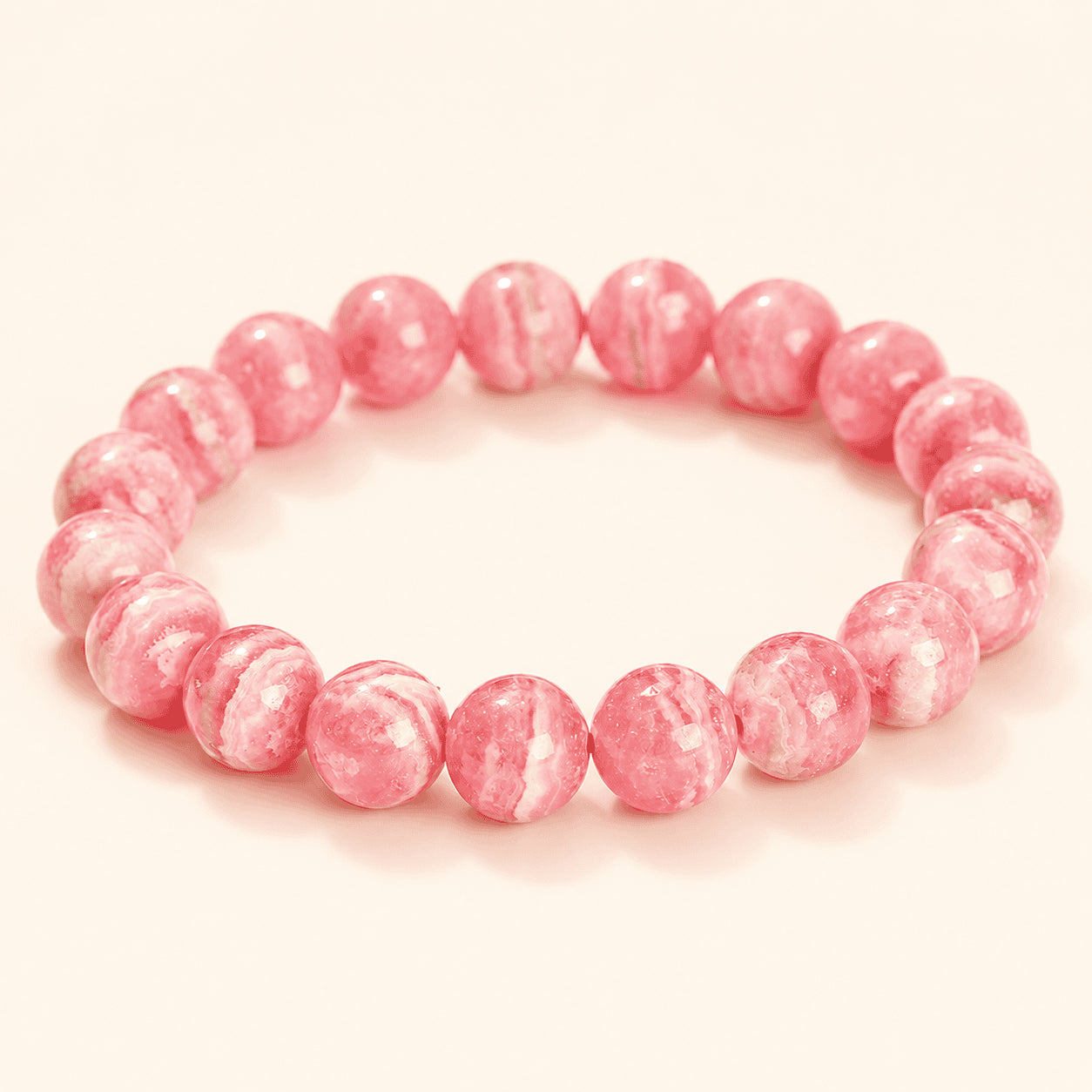
Rhodochrosite Bracelet
A quiet bracelet for turning this intention into a small daily ritual.
Shop This Authentic Piece →How to Wear and Care for Your Rhodochrosite Bracelet
Which Wrist, Pairing with Other Crystals, and Daily Wear Tips
Decision Table: Wearing and Pairing Your Rhodochrosite Bracelet
| Decision | Option A | Option B | Best For |
|---|---|---|---|
| Wrist | Left wrist — receiving, inward, self-love work, meditation | Right wrist — giving, outward, compassion toward others, social days | Left if you are in a healing or reflective season; right if you want warmth directed toward relationships and work |
| Pairing with other stones | With rose quartz or green aventurine — softens and reinforces heart-centered themes | With black tourmaline or hematite — grounding, if you find pink stones too activating emotionally | Pairing is a preference, not a rule; test one combination at a time so you can actually notice what shifts |
| When to wear | Daily, including at work or while sleeping (if the clasp and fit allow) | Only during intentional practices — journaling, meditation, therapy-adjacent reflection | Daily wear suits people who want a steady reminder; occasional wear suits those who want the stone to mark a specific ritual |
| Fit | Slightly loose, so beads roll gently against the wrist | Snug, so the bracelet stays put during movement | Choose comfort first — a bracelet you notice because it pinches will not function as a calming cue |
Cleansing, Charging, and Protecting the Stone’s Soft Surface
Rhodochrosite is a soft mineral, and museum-grade material is typically too fragile for conventional gem cutting. Your bracelet survives because it is worn gently, not because it is tough. For cleansing, skip water soaks, salt, and ultrasonic cleaners — prolonged moisture and abrasion can dull the surface. Instead, rest the bracelet on a clean cloth or in a dish of dry rice overnight, or pass it through incense smoke briefly. To charge it, leave it in soft morning light indoors rather than direct sun, and store it in a pouch away from harder stones that could scratch it. Wipe beads with a dry, soft cloth after wear to remove skin oils.
Is Rhodochrosite Safe to Wear? What to Know Before You Buy
For most people, wearing a rhodochrosite bracelet against the skin is fine. The Mineral Database notes that no health risks have been entered for this material but advises treating mineral specimens with care. That is the honest answer: rhodochrosite is not listed as a known skin hazard, yet it is still a mineral, and anyone with sensitive skin should watch for irritation from the beads, the elastic, or accumulated residue. Remove the bracelet before swimming, showering, cleaning with chemicals, or heavy exercise. This stone is not a medical device and does not treat, cure, or prevent any condition — if you are working through trauma or persistent low mood, please pair any crystal practice with qualified professional support. When choosing a bracelet, look for natural banding that varies bead to bead, a smooth finish free of cracks, and a seller who states whether the piece is natural or dyed. Uniform, flatly saturated pink at a very low price is often a sign of treated or imitation material.
FAQ
What are the benefits of wearing a rhodochrosite bracelet?
Wearers most often associate it with emotional healing, self-love, compassion, and a gentle lift in mood — including renewed joy, confidence, and positive energy. Many describe it as a wearable reminder to respond to old triggers with more softness.
How does rhodochrosite help with emotional healing and the heart chakra?
Rhodochrosite is traditionally linked to the heart chakra, the center associated with love, grief, and forgiveness. Its pink, banded appearance is read as a symbol of tenderness layered over experience, and it is frequently used for inner child work and emotional release during meditation or journaling.
Which wrist should you wear a rhodochrosite bracelet on, and how do you cleanse it?
Many wear it on the left wrist for inward, self-directed work and on the right for outward compassion toward others — neither is mandatory. To cleanse, avoid water, salt, and ultrasonic devices; instead rest it on a dry cloth, in dry rice, or pass it briefly through incense smoke, then charge it in soft indoor light.
Is rhodochrosite safe to wear against the skin every day?
For most people, yes. No health risks for the material are listed in the Mineral Database, though it advises handling mineral specimens with care. If your skin is sensitive, remove the bracelet during swimming, showering, cleaning, and heavy exercise, and check for irritation from the elastic or residue.
How do you choose a genuine rhodochrosite bracelet?
Look for natural, uneven banding in rose-red to pink tones across individual beads, a smooth surface without cracks, and clear disclosure of whether the stone is natural or dyed. Perfectly uniform color at a suspiciously low price often signals treatment or imitation.
Sources
- Rhodochrosite | Smithsonian National Museum of Natural History
- Rhodochrosite: Mineral information, data and localities | Mindat
This article reflects traditional crystal associations and personal wear practices. It is not medical advice, and rhodochrosite is not intended to diagnose, treat, or cure any condition.
© 2026 Lumina Quartz
Product Facts From the Current Catalog
These details come from the active Lumina Quartz catalog record checked on 2026-09-24. They are product-listing facts, not laboratory results or invented wear-test claims.
| Listed product | Rhodochrosite Bracelet – Compassionate Courage |
|---|---|
| Format | Bracelet |
| Listed price snapshot | 65.99 |
Price, availability, and options may change. Check the live product listing before choosing.