Moonstone Bracelet Meaning: How to Choose the Perfect One
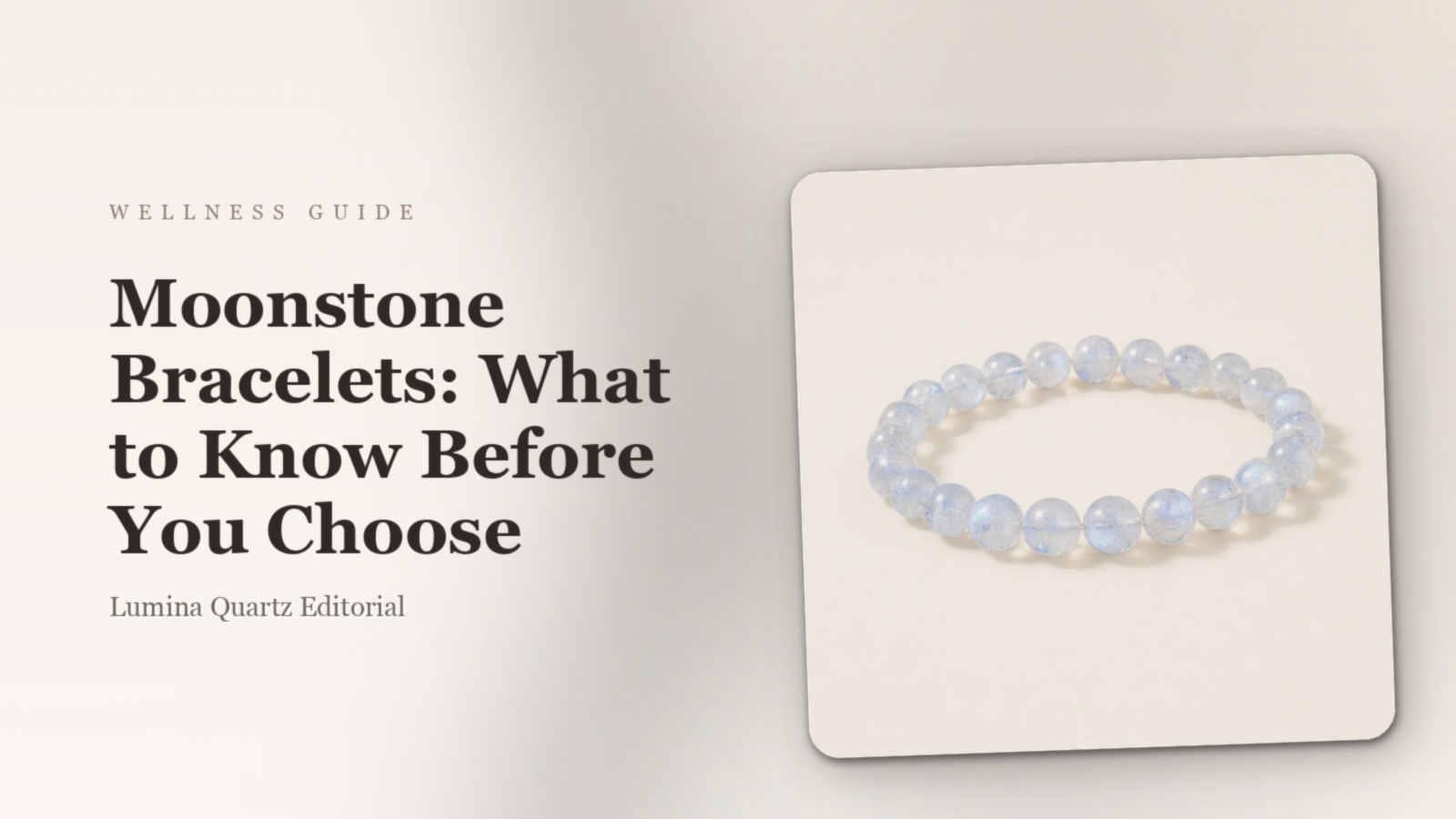
There is a quiet kind of magic in slipping a moonstone bracelet onto your wrist. The stone catches a ray of light, and for just a breath, it seems to glow from within — soft, silver-white, like moonlight spilling across still water. It is a feeling that is hard to put into words, yet instantly familiar to anyone who has ever worn one.
Moonstone has been treasured for millennia, from ancient Rome and India to the Art Nouveau jewelers of the late nineteenth century. Today it remains one of the most beloved gemstones for everyday adornment, not only for its luminous, ethereal beauty but for the quieter meanings it carries. Whether you are drawn to moonstone for its aesthetics or its symbolism, a moonstone bracelet is a meaningful addition to any jewelry collection — and a gentle companion for your everyday life.
Before you choose your bracelet, however, it helps to understand what you are looking at, how to assess its quality, and how to care for it. This guide will walk you through everything you need to know.
Introduction to Moonstone Bracelets
Moonstone is a member of the feldspar mineral family, most celebrated for a visual phenomenon called adularescence. Simply put, adularescence is the soft, floating glow that hovers beneath the surface of the gemstone, often appearing as a blue or white shimmer that seems to move as the stone tilts in the light. This effect is created by light scattering between microscopic layers of orthoclase and albite inside the stone.
The finest moonstones display a vivid, electric-blue adularescence against a clear or slightly milky body. Moonstone also occurs in white, peach, gray, and rainbow varieties, each with its own gentle character. Because no two stones form alike, every moonstone bracelet possesses a unique quality of light. The Gemological Institute of America (GIA), which grades moonstone alongside diamonds and other fine gems, describes the most desirable material as colorless and semitransparent, with a vivid blue sheen.
Moonstone bracelets come in many styles: beaded strands of polished stones, single cabochons set in gold or silver, flexible stretch bracelets, and bangle designs. Each style offers a distinct feel, both visually and on the wrist. Choosing a bracelet should be as much about how it feels as how it looks. A moonstone bracelet, after all, spends its days resting against your skin — it becomes part of your rhythm.
The Meaning and Healing Properties of Moonstone
Moonstone has long been associated with the moon and its cycles. In ancient Roman tradition, it was believed to be formed from solid moonlight. In Eastern traditions, it has been regarded as a sacred stone that brings good fortune and deep insight. Across many cultures, moonstone is a symbol of intuition, inner growth, and new beginnings.
Those who work with gemstones on a spiritual level often describe moonstone in these ways:
- Emotional harmony: Moonstone is associated with a sense of calm and emotional balance during periods of change or uncertainty.
- Intuition: It is often linked with heightened intuition and reflective, inward thinking.
- Inspiration: Artists and writers have long kept moonstone nearby to encourage creative flow.
- Renewal: Many people turn to moonstone when beginning a new chapter — a new job, relationship, home, or personal practice.
It is important to approach these ideas with honesty and grounded expectations. These are traditional and symbolic associations, not medical promises. Wearing a moonstone bracelet may support a mindfulness practice or serve as a positive reminder, but it is not a substitute for professional medical care. Its true value is the meaning you give it.
With that said, there is something undeniably grounding about having a small, luminous stone at your wrist. It offers a pause, an anchor, a moment to breathe. In a fast-moving world, that alone can be a quiet form of support.
How to Choose the Perfect Moonstone Bracelet
Choosing a moonstone bracelet is a personal process. You might be drawn by color, by style, by how it feels in your hand, or by the intentions you hope to set. A well-chosen bracelet should feel like an extension of you.
Quality Factors: Color, Clarity, and Cut
The defining quality of moonstone is its adularescence. Hold a candidate stone in good light and gently rotate it. Look for a mobile, silvery-blue glow that seems to slide across the surface of the stone. This light effect — not the base color — is the real measure of moonstone quality.
Color still plays a role. A white or colorless body with a vivid blue adularescence is considered by many to be the most desirable, though peach and gray moonstones have a subtler, earthy appeal. Rainbow moonstone, a trade name for labradorite that shows adularescence, displays a multicolored flash and is a popular choice for its iridescent brightness.
Clarity is assessed by eye. The stone should appear clean, or at least free of distracting inclusions that interfere with its glow. Minor internal characteristics are natural and acceptable in a gemstone formed deep within the earth.
Cut is equally important. Moonstone is traditionally cut as a cabochon — a smooth, rounded dome without facets — because this shape best displays the adularescence. Check the symmetry of the dome, the smoothness of the polish, and the overall proportions. A well-cut moonstone will feel silky, even, and pleasing to touch.
Moonstone Bracelet Styles: Gold, Silver, and Beaded
Gold moonstone bracelets bring warmth to the stone's cool glow. Yellow or rose gold settings can make a peach or cream moonstone look richer, while white gold and gold vermeil keep the look bright and modern. Gold suits dressier pieces — a single cabochon on a fine chain, or a slim bangle you can wear from desk to dinner.
Silver moonstone bracelets echo the stone's own palette. Sterling silver, white gold, and platinum-toned metals intensify the blue sheen and read as cool, understated, and easy to layer. If you want the adularescence to be the focal point, silver is often the quieter frame.
Beaded moonstone bracelets are the most casual and tactile option. Round polished beads catch light from every angle, so even modest-quality stones look lively in a strand. Beaded designs usually use an elastic cord or a clasp, and they stack beautifully with other delicate bracelets. Bead size matters here: 6 mm reads as fine and subtle, 8 mm feels balanced, and 10 mm or larger makes a statement.
What Are Jade Bracelets For?
If you are comparing gemstone bracelets, you may have seen jade mentioned alongside moonstone — and wondered what jade bracelets are for. The two stones carry very different traditions. Jade, especially in Chinese culture, has been worn for thousands of years as a symbol of protection, good fortune, longevity, and harmony. Jade bangles are often given as gifts to mark a milestone, a birth, or a marriage, and they are prized as much for their smooth, cool feel against the skin as for their color.
Moonstone, by contrast, is a stone of reflection and change. Where jade tends to symbolize enduring steadiness, moonstone is associated with cycles, intuition, and new beginnings. Neither is better — the choice usually comes down to the feeling you want to carry. If you are drawn to quiet stability, jade may speak to you. If you are in a season of transition or want a reminder to slow down and listen inward, a moonstone bracelet is often the more natural fit.
Sizing and Adjustability
Fit is the most overlooked part of choosing a bracelet, and the one you will notice every day. Measure your wrist with a soft tape measure just below the wrist bone, keeping the tape snug but not tight. As a general rule, add about 1.3 cm (half an inch) for a close-fitting bracelet, or 2.5 cm (one inch) for a looser drape.
Stretch bracelets are the most forgiving, though the elastic cord will relax over time. Strand bracelets should sit close to the wrist without pinching. Chain and bangle styles are often the easiest to adjust, and many designs include an extender chain or a sliding clasp. If you are between sizes, choose the larger option for beaded strands and the smaller option for rigid bangles, which should slide over the widest part of your hand without force.
How to Wear and Style Your Moonstone Bracelet
Moonstone is one of the easiest gemstones to wear every day. Its neutral, luminous palette sits comfortably beside almost any metal and works equally well with denim and linen as it does with evening wear.
- Layer with intention: Pair a fine moonstone strand with a single metal bangle for contrast, or with other pale stones for a softer, tonal look.
- Mix metals freely: Silver and gold both flatter moonstone; the stone reads as neutral between them.
- Choose your wrist: Many people wear their moonstone bracelet on the left wrist as a reminder stone, though there is no rule — comfort matters most.
- Let it be a pause: Some wearers touch the stone once a day as a small grounding ritual, a moment to check in with themselves.
If you enjoy building small daily practices around your jewelry, our guide to setting intention, wearing, and cleansing your stone is a gentle place to start.
Caring for Your Moonstone Bracelet
Moonstone ranks 6 to 6.5 on the Mohs hardness scale and has perfect cleavage, which means it can chip or crack if struck at the right angle. A little care will keep it glowing for years.
- Remove it for rough work: Take your bracelet off for the gym, gardening, and heavy cleaning.
- Store it separately: Keep it in a soft pouch or a lined compartment so harder stones do not scratch it.
- Clean gently: Use lukewarm water with a drop of mild soap and a soft cloth or baby toothbrush, then pat dry.
- Skip harsh methods: Avoid ultrasonic and steam cleaners, and keep the stone away from household chemicals, perfume, and hairspray.
- Check the cord or clasp: Elastic cords and small clasps wear out; inspect them every few months, especially on stretch bracelets.
Moonstone Bracelet Decision Guide: What to Check Before You Buy
If you are choosing between two or three bracelets and want a clear way to compare them, use this checklist. It covers the factors gemologists use when assessing moonstone, plus the practical questions that matter once the bracelet is on your wrist.
- Adularescence first: Rotate the stone in daylight. Does the glow move with the light rather than sitting flat? A mobile blue or white sheen is the single strongest indicator of quality.
- Body tone: Colorless to near-transparent with a blue sheen is the classic ideal. Milky, peach, and gray bodies are perfectly beautiful — just know which look you actually prefer.
- Surface condition: Look for scratches, chips, or dull patches, especially on the dome of a cabochon.
- Cut and finish: The dome should be evenly rounded and smoothly polished, with no flat spots or visible tool marks.
- Setting and metal: Prongs should sit flush and hold the stone securely. Choose gold for warmth, silver for cool clarity, and a stretch cord only if you accept that it will need restringing eventually.
- Fit: Measure your wrist and decide whether you want a close fit or a loose drape before you compare sizes.
- Care reality check: If you never take your jewelry off, choose a smaller, lower-profile design that is less likely to catch on things.
Where the boundaries lie: A moonstone bracelet is a beautiful object with a long cultural and symbolic history. It is not a treatment, a diagnosis, or a guarantee of any outcome. Its most reliable benefits are the ones you can observe — a reminder to pause, a piece you enjoy wearing, and a small daily ritual that is entirely yours. For health concerns of any kind, please speak with a qualified professional.
FAQ About Moonstone Bracelets
What are the benefits of wearing a moonstone bracelet?
Wearers most often describe a sense of calm, a reminder to slow down, and a feeling of connection to their own intentions. In crystal traditions, moonstone is associated with emotional balance, intuition, inspiration, and new beginnings. These are symbolic and cultural associations rather than medical effects, and a bracelet should never replace professional care.
How do I choose a high-quality moonstone bracelet?
Start with the light. Hold the stone in daylight and rotate it — a high-quality moonstone shows a bright, mobile blue or white sheen that appears to float beneath a clean surface. Then check the body color and transparency, the smoothness of the dome, the security of the setting, and the fit on your wrist. A modest stone with vivid adularescence usually looks better than a large stone with a flat, cloudy glow.
What does a moonstone bracelet symbolize?
Moonstone has been linked to the moon and its cycles for centuries, including the ancient Roman belief that it was formed from solidified moonlight. Across many cultures it symbolizes intuition, inner growth, gentle protection during change, and new beginnings — which is why it is often chosen for fresh starts of all kinds.
How can I tell if a moonstone bracelet is real?
Look at how the light behaves. Genuine moonstone's sheen comes from inside the stone and shifts as you tilt it. Glass or plastic imitations tend to look uniformly milky or flat, and glass may contain small round bubbles under magnification. Rainbow moonstone and some labradorite look-alikes are natural feldspars rather than imitations, but they are often sold under misleading names. Buying from a seller who lists the material honestly and offers returns is the simplest safeguard.
Can I wear a moonstone bracelet every day?
Yes — many people do. At 6 to 6.5 on the Mohs scale, moonstone is suitable for regular wear with basic care. Remove it for sports, heavy chores, and anything that could knock the stone against a hard surface, store it separately from harder gems, and have elastic cords or clasps checked periodically.
Final Thoughts: Is a Moonstone Bracelet Right for You?
A moonstone bracelet is one of those rare pieces that works as both jewelry and keepsake. It is quiet enough for everyday wear, distinctive enough to be noticed, and rich with meaning for anyone moving through a season of change or reflection.
Choose the stone that catches your eye, check the glow before anything else, get the fit right, and treat it gently. If you would like a starting point, our Moonstone Bracelet – New Beginnings was made for exactly that kind of small, steady ritual.
Related Reading
- Crystal Rituals for Beginners: A Simple Guide to Daily Practice
- Daily Crystal Ritual: How to Set Intention, Wear, and Cleanse Your Stone
- Calming Crystals: Crystal Ritual Guide
- Obsidian Bracelet: Your Guide to Grounding & Protection