A Practical Guide to Angelite Bracelet Meaning
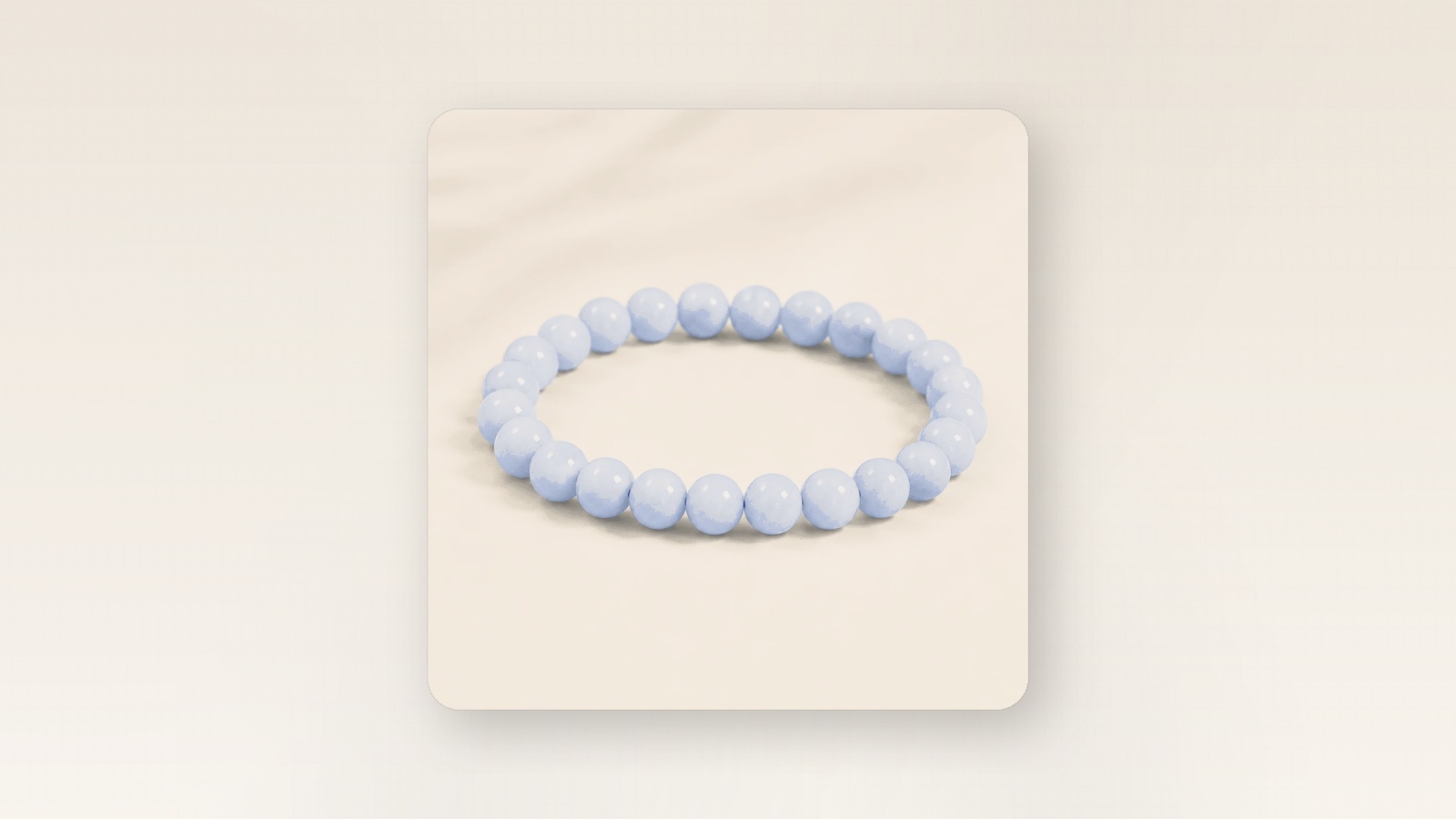
Table of Contents
- Table of Contents
- Key Insights into Angelite Bracelets
- What is Angelite? Unpacking the Stone's Identity
- The Symbolic Meaning of an Angelite Bracelet: Awareness and Peace
- Angelite and the Chakras: Focusing on Communication
- Choosing Angelite: A Gentle Path to Awareness
- Care and Authenticity: Maintaining Your Angelite Bracelet
- Cleansing and Charging Your Angelite Bracelet
- Identifying Genuine Angelite
- Frequently Asked Questions About Angelite Bracelets
- What does an angelite bracelet mean and what is it good for?
- Which chakra is an angelite bracelet associated with?
- Is angelite the same as celestite, and can you wear it every day?
- How do you cleanse and charge an angelite bracelet without damaging it?
- How can you tell a genuine angelite bracelet from a fake or mislabeled one?
- Sources
Table of Contents
- Key Insights into Angelite Bracelets
- What is Angelite? Unpacking the Stone's Identity
- The Symbolic Meaning of an Angelite Bracelet: Awareness and Peace
- Angelite and the Chakras: Focusing on Communication
- Choosing Angelite: A Gentle Path to Awareness
- Care and Authenticity: Maintaining Your Angelite Bracelet
- Cleansing and Charging Your Angelite Bracelet
- Identifying Genuine Angelite
- Frequently Asked Questions About Angelite Bracelets
- What does an angelite bracelet mean and what is it good for?
- Which chakra is an angelite bracelet associated with?
- Is angelite the same as celestite, and can you wear it every day?
- How do you cleanse and charge an angelite bracelet without damaging it?
- How can you tell a genuine angelite bracelet from a fake or mislabeled one?
An angelite bracelet is a beaded accessory crafted from angelite, a trade name for fine-grained, light blue-grey anhydrite, often sourced from Peru. In crystal tradition, its core meaning is known as the "stone of awareness," serving as a calm, accessible reminder for clearer communication, fostering forgiveness, and offering a gentle sense of protection. It is most frequently associated with the throat chakra, symbolizing enhanced self-expression and peaceful interaction.
Key Insights into Angelite Bracelets
- Angelite is a trade name for anhydrite, a calcium sulfate that is softer than many other gemstone materials used in bracelets.
- It is traditionally known as the "stone of awareness," linked with clear communication, self-expression, forgiveness, and emotional stability.
- The throat chakra is its primary association, often used in practices focused on speech and breath.
- Angelite is distinct from celestite; differences in color and texture are key identifiers.
- Due to its softness, angelite should be kept dry and away from harsh chemicals or harder stones to maintain its integrity.
What is Angelite? Unpacking the Stone's Identity
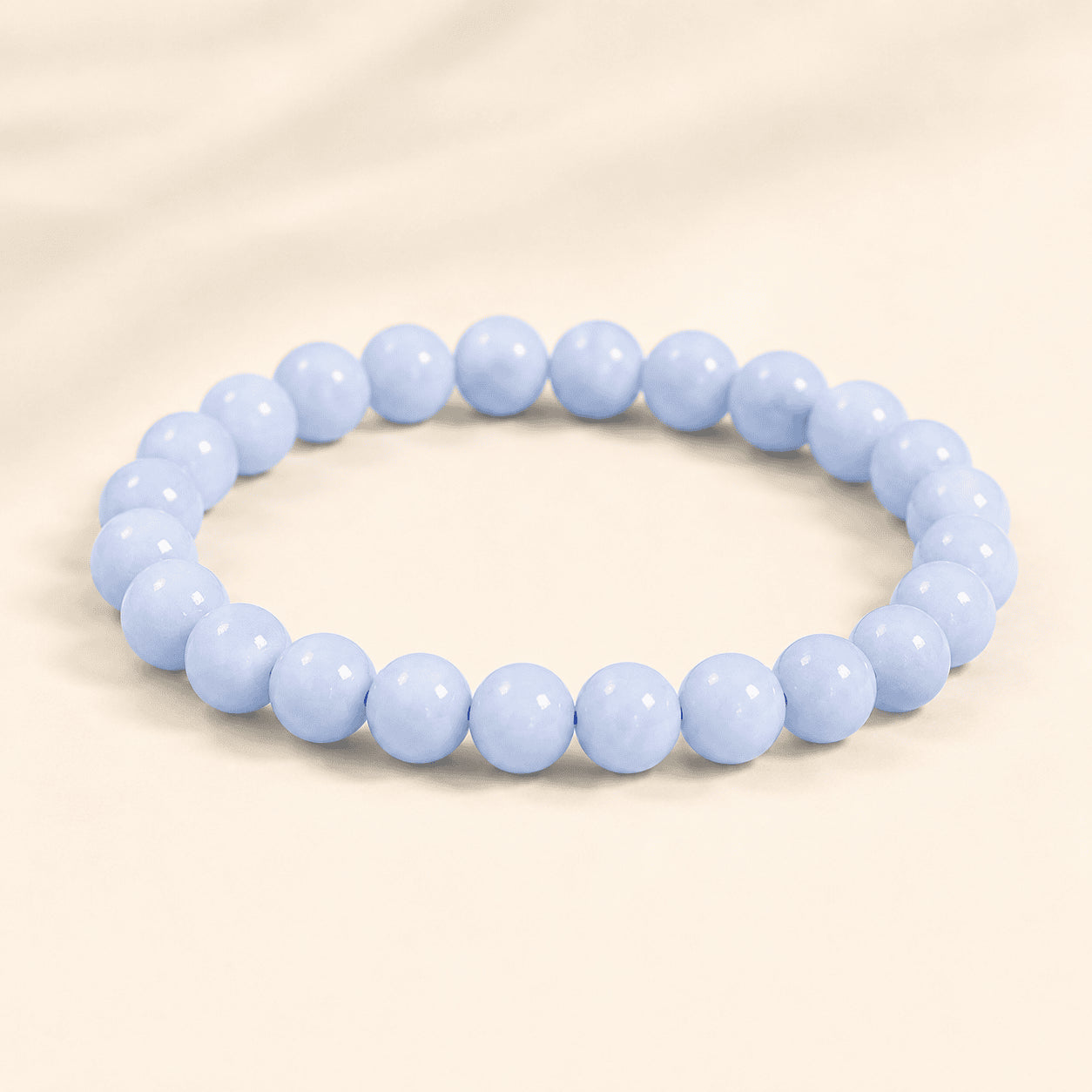
At its heart, an angelite bracelet features angelite cut into smooth beads and typically strung on elastic or with a clasp. The material itself, angelite, is a specific form of anhydrite. Mindat, an authoritative source on mineral information, describes angelite as a semi-transparent, light blue-grey, fine-grained anhydrite, widely marketed as a gem material, with significant supply processed in Lima (Mindat).
Anhydrite is a calcium sulfate, chemically related to gypsum but distinguished by its denser, less water-rich composition. This mineralogical difference is crucial; while some crystal guides may mistakenly link angelite to gypsum, its anhydrite nature explains its unique physical properties and care requirements. The name "angelite" itself derives from the Greek angelos, meaning "messenger from heaven," leading to its frequent description as a "prayer stone" or a conduit for communication between the mundane and the spiritual. For those who use it as a personal reminder, the name can serve as a prompt to pause and reflect, rather than as evidence of any metaphysical function.
The Symbolic Meaning of an Angelite Bracelet: Awareness and Peace
Angelite is often called the "stone of awareness" in informal crystal literature, but that label describes a personal practice, not a measurable property of the mineral. Some people who wear it choose to treat the bracelet as a cue to speak carefully and honestly, or to check in with their own thoughts before responding. If you like that idea, you can use the piece as a small daily reminder to slow down and choose your words with care, without assuming the stone itself produces clarity or self-expression.
Another common theme in informal descriptions of angelite is peace, again framed as a personal choice rather than a property of the mineral. Wearing the bracelet can be a reminder to take a quiet moment, step away from a heated exchange, or approach a difficult task calmly. Some people also use it as a cue to let go of resentment or to set a boundary around negative influences in their day. These are habits you can build with or without the bracelet; the stone is simply a visual prompt, not a source of emotional healing or protection.
Angelite and the Chakras: Focusing on Communication
In informal chakra frameworks, angelite is often associated with the throat chakra (Vishuddha). That association is a symbolic convention, not a verified physiological link. If you find the idea useful, you can wear the bracelet as a reminder to speak clearly and honestly, or to pause before you respond in a conversation. The practice is yours to define; the stone does not act on the throat or on verbal ability.
Practically, an angelite bracelet transforms this intention into a portable, everyday practice. Before engaging in a potentially difficult conversation, one might hold a bead between thumb and forefinger and take a few slow, deliberate breaths. The bracelet, in this context, serves as a gentle anchor, reminding the wearer to pause, center themselves, and choose their words thoughtfully, rather than reacting impulsively. This simple act can significantly impact the clarity and outcome of communication.
Angelite Bracelet – Gentle Reassurance
A quiet bracelet for turning this intention into a small daily ritual.
View the ritual pieceChoosing Angelite: A Gentle Path to Awareness
When considering an angelite bracelet, it's helpful to understand its unique properties and how they compare to other popular gemstones. Angelite is celebrated for its calming, gentle energy and its association with clear communication and peace. However, its physical composition, primarily anhydrite, means it is a softer stone (around 3.5 on the Mohs scale) compared to many other crystals like quartz (7) or amethyst (7).
- For Daily Wear: Due to its softness, angelite is more prone to scratches, chipping, and damage from water or chemicals. While it can be worn daily, it requires more mindful care. It's not ideal for activities where it might be exposed to impact, sweat, or harsh environments.
- Compared to Celestite: Angelite is often confused with celestite due to similar blue hues. However, they are distinct minerals. Celestite (strontium sulfate) is typically found in delicate crystal formations, while angelite (calcium sulfate) is more compact and opaque. "Green angelite" is also often a misnomer, typically referring to other green stones or dyed varieties. Genuine angelite usually presents as a consistent light blue-grey.
- Energy Profile: If you're seeking a stone for forceful manifestation or protection from external energies, you might consider stronger, harder stones like black tourmaline or obsidian. Angelite, by contrast, offers a serene, introspective energy. It encourages inner work, emotional release, and gentle spiritual expansion, rather than outward assertion. Choose angelite if your intention aligns with fostering calm, empathy, and clear, heartfelt communication.
Care and Authenticity: Maintaining Your Angelite Bracelet
Proper care is essential to preserve the beauty and integrity of an angelite bracelet. Given that angelite is a relatively soft stone (Mohs hardness of approximately 3.5), it is susceptible to damage from various environmental factors.
Cleansing and Charging Your Angelite Bracelet
Unlike some hardier stones, angelite should be kept away from water, salt, perfumes, and other chemicals. Exposure to water can potentially dull its luster or cause structural changes over time due to its anhydrite composition. Therefore, traditional water-based cleansing methods are not recommended. Safer alternatives for cleansing and charging include:
- Dry cleansing: Gently wiping the beads with a soft, dry cloth.
- Sound cleansing: Placing the bracelet near a singing bowl or using a tuning fork.
- Smudging: Passing it through the smoke of sage or palo santo.
- Moonlight charging: Placing it under the light of the full moon.
- Earth burial: Temporarily burying it in a pot of soil or a garden (ensure it's completely dry and protected).
Always ensure your angelite bracelet is stored separately from harder stones to prevent scratching.
Identifying Genuine Angelite
Distinguishing a genuine angelite bracelet from fakes or mislabeled stones primarily relies on its physical characteristics:
- Color: Genuine angelite exhibits a consistent, pale blue-grey hue, often semi-transparent. Variations like "green angelite" are typically other minerals or dyed stones.
- Texture: Angelite has a fine-grained, smooth texture. It should not appear excessively glassy or crystalline like celestite.
- Hardness: As a soft stone, it can be scratched with a harder object or even a fingernail if enough pressure is applied, though this should be tested with extreme caution on an inconspicuous area. If it's unusually hard, it might not be angelite.
- Weight: It should feel relatively light for its size compared to denser gemstones.
Frequently Asked Questions About Angelite Bracelets
-
What does an angelite bracelet mean and what is it good for?
An angelite bracelet symbolizes awareness, clear communication, forgiveness, and peace. It's believed to be good for fostering calm, self-expression, emotional healing, and providing gentle protection.
-
Which chakra is an angelite bracelet associated with?
Angelite is most often associated with the throat chakra (Vishuddha), supporting honest self-expression and clear communication.
-
Is angelite the same as celestite, and can you wear it every day?
No, angelite is not the same as celestite; they are distinct minerals. While you can wear an angelite bracelet every day, it is a soft stone and requires careful handling to prevent scratches or damage from water, chemicals, or impact.
-
How do you cleanse and charge an angelite bracelet without damaging it?
To cleanse and charge angelite, avoid water or salt. Instead, use dry methods like wiping with a soft cloth, smudging with sage, sound cleansing with a singing bowl, or charging under moonlight.
-
How can you tell a genuine angelite bracelet from a fake or mislabeled one?
Genuine angelite is typically a consistent pale blue-grey, with a fine-grained, smooth texture, and is relatively soft. Color and texture are the fastest field tests; be wary of unusually bright colors or overly crystalline appearances.
By understanding both the symbolic significance and the practical care requirements of angelite, wearers can fully appreciate their bracelet as a constant companion for fostering awareness, promoting peaceful communication, and embracing emotional tranquility in their daily lives.
A quiet piece for carrying this ritual into the day.
Angelite Bracelet — Lumina QuartzSources
Product Facts From the Current Catalog
These details come from the active Lumina Quartz catalog record checked on 2026-09-17. They are product-listing facts, not laboratory results or invented wear-test claims.
| Listed product | Angelite Bracelet – Gentle Reassurance |
|---|---|
| Format | Bracelet |
| Listed price snapshot | 75.00 |
Price, availability, and options may change. Check the live product listing before choosing.